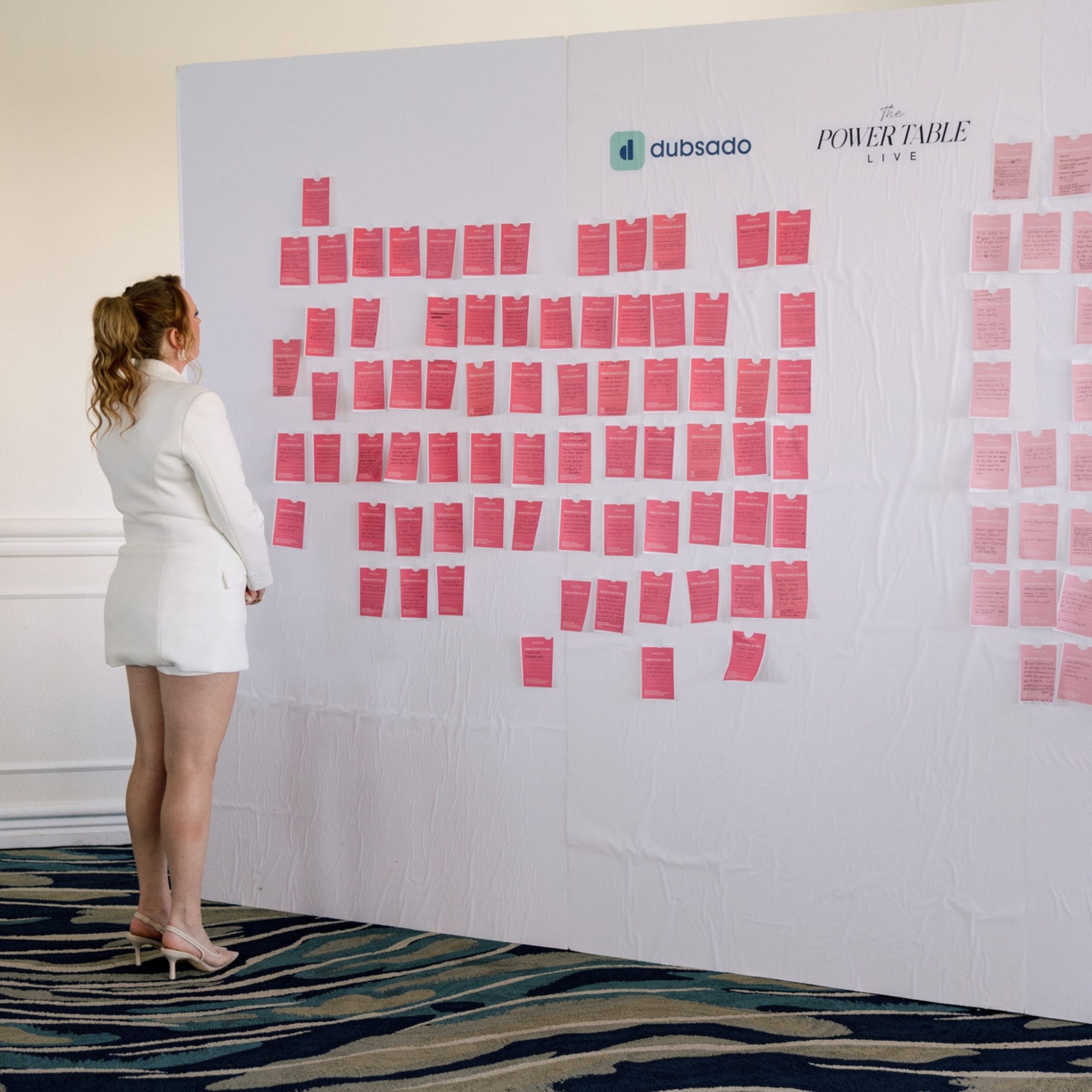


There’s a moment that happens when event hosts reviewing speaker applications that most people never see (including me, I host my annual conference, Power Table LIVE).
As the event host or speaker selection coordination,
You open the application.
You click through to the applicant’s website.
You glance at their social media.
Maybe you watch a short clip or scan their topics.
And within a few minutes—sometimes less—you already know.
It’s not always something you could fully explain.
But you know whether they’re a yes.
Over the past three years, I’ve reviewed more than 300 speaker applications, selected over 40 speakers for my stage, and hosted 75+ podcast guests.
And what I can tell you is this:
The difference between someone who gets booked and someone who doesn’t is rarely talent.
It’s readiness.
Because when you’re booking speakers, you’re not just asking:
“Is this person good?”
You’re asking:
“Does this make sense in this room, for this audience, right now?”
And that question has layers most people don’t consider.
What Decision-Makers Are Actually Evaluating
When I say something “feels like a yes,” for my stage, it’s not vague—it’s contextual.
I’m thinking:
Does this topic align with the theme of this year’s event?
Does it complement the other speakers we’re considering?
Does it bring something new compared to last year?
Does it match the experience level of the audience?
Does it support the overall experience we’re creating?
Does it make sense alongside our sponsors, partners, or programming direction?
Because booking a speaker isn’t about evaluating someone in isolation.
It’s about evaluating how they fit into the entire experience.
You could be an incredible speaker—and still not be the right fit for that specific event.
And understanding that changes how you approach everything.
1. Clear, Specific Talk Topics That Fit the Room
One of the fastest ways someone gets overlooked is by being too broad.
Topics like:
“Grow your business”
“Mindset for success”
“Marketing strategies that work”
Don’t give enough information to make a decision.
As a host, I need to quickly understand:
What exactly will you talk about?
Who is it for?
What will the audience walk away with?
But beyond clarity, I’m also evaluating fit.
Does this topic:
- Align with what we’re trying to create?
- Add something different to the lineup?
- Feel relevant to this audience right now?
The strongest applications don’t just present a good topic.
They present a topic that clearly belongs in that room.
2. Proof of Delivery + Content That Reinforces It
You do not need a long list of stages to get booked.
But you do need proof that you can deliver—and that your expertise is real, visible, and current.
This is where most people misunderstand readiness.
They think proof comes after the opportunity.
In reality, proof is what creates the opportunity.
When I’m reviewing someone, I’m not just reading their topic.
I’m looking at their presence and asking:
Can I see this person already doing this?
That proof can look like:
- A video of you teaching or presenting
- A live training or workshop
- A podcast appearance
- Long-form or short-form content where you’re clearly articulating your ideas
But here’s the part most people miss:
Your content should actively reinforce the topic you’re pitching.
In fact, one of the strongest things you can do is intentionally create and share content around your topic in the weeks leading up to applying.
Because when a host clicks through your profile, they should immediately see:
“Oh—this is what she talks about.”
Not something you said once.
A pattern.
That alignment between your application and your content is what builds trust quickly.
3. A Cohesive, Credible Online Presence
By the time I open your application, I’m already evaluating more than your answers.
I’m looking at your entire presence.
Your website.
Your bio.
Your social platforms.
And I’m asking:
Does this feel aligned?
Do I understand what you do within seconds?
Does everything point back to the same expertise?
Does your presence match the level of the event?
If your application says one thing, but your content or website says something else, it creates friction.
Not because you’re not capable.
But because it doesn’t feel cohesive.
And cohesion is what creates confidence.
4. You’re Not a Stranger to the Room
This is one of the most important—and most overlooked—factors.
Your speaker application should not be the first time an event host is hearing your name.
Because opportunities don’t start at the application.
They start with familiarity.
If I recognize your name when your application comes through, you are already at an advantage.
That familiarity can come from:
- Engaging with content consistently
- Attending events (in person or virtually)
- Listening to the podcast
- Being part of the community
- Replying to emails or participating in conversations
All of those touchpoints build recognition.
And recognition builds trust.
When I see an application from someone I’ve already seen showing up, contributing, and engaging, it doesn’t feel like a cold decision.
It feels like a natural next step.
What Most People Get Wrong
Most people focus all of their energy on the application itself.
They try to perfect their answers.
Refine their pitch.
Say the “right” thing.
But by the time a host is reading your application, they’re not just evaluating what you wrote.
They’re evaluating everything around it.
And that evaluation happens quickly.
Not in hours.
In minutes.
Sometimes seconds.
The Bottom Line
You don’t need more time.
You don’t need more credentials.
You don’t need to wait until someone gives you a chance.
You need to become someone who already feels like the right choice.
Because when those signals are in place, something shifts.
Decision-makers don’t have to convince themselves.
They don’t have to take a risk.
They don’t have to wonder if it will work.
They already know.
And that’s what gets you booked.
Speaker Readiness Checklist
If you want to start positioning yourself as a clear yes, here’s what to focus on:
- Your talk topics are specific, clear, and aligned with a real audience
- Your topic fits within the type of events or platforms you’re applying to
- You have visible proof of how you teach, speak, or communicate your ideas
- Your recent content reflects and reinforces the topic you’re pitching
- Your website, bio, and social platforms clearly communicate your expertise
- Your online presence feels cohesive and aligned across all platforms
- You have engaged with the host, event, or community before applying
- Your name is familiar (not a first-time touchpoint) when your application is reviewed
- Your topic includes clear, tangible takeaways for the audience
- You can confidently articulate why your talk belongs in that specific room
I’m Taylor Smith
Welcome to a space where personal branding meets personal development. Here, you’ll find insights, strategies, and a dose of inspiration to help you stand out, own the stage, and lead with confidence.


Read the Article
5 Ways to Land Your First Speaking or Podcast Opportunity
read the article

Join My Mastermind
Ready to Stand Out Online?
Let’s work together to build your business's visibility & scale inside The Power Table Mastermind.


