

This is Article 6 of the Female Founder Economy series.
In this series, I define and document the Female Founder Economy: the goals, priorities, revenue models, and growth patterns of entrepreneurial women who are building their companies primarily online. Topics explored across the series include, but are not limited to, visibility, leadership, team and scale, revenue and economic impact, emotional and mental well-being, relationship capital, and AI.
For Female Founders, it’s not the Creator Economy. It’s the Curator Economy
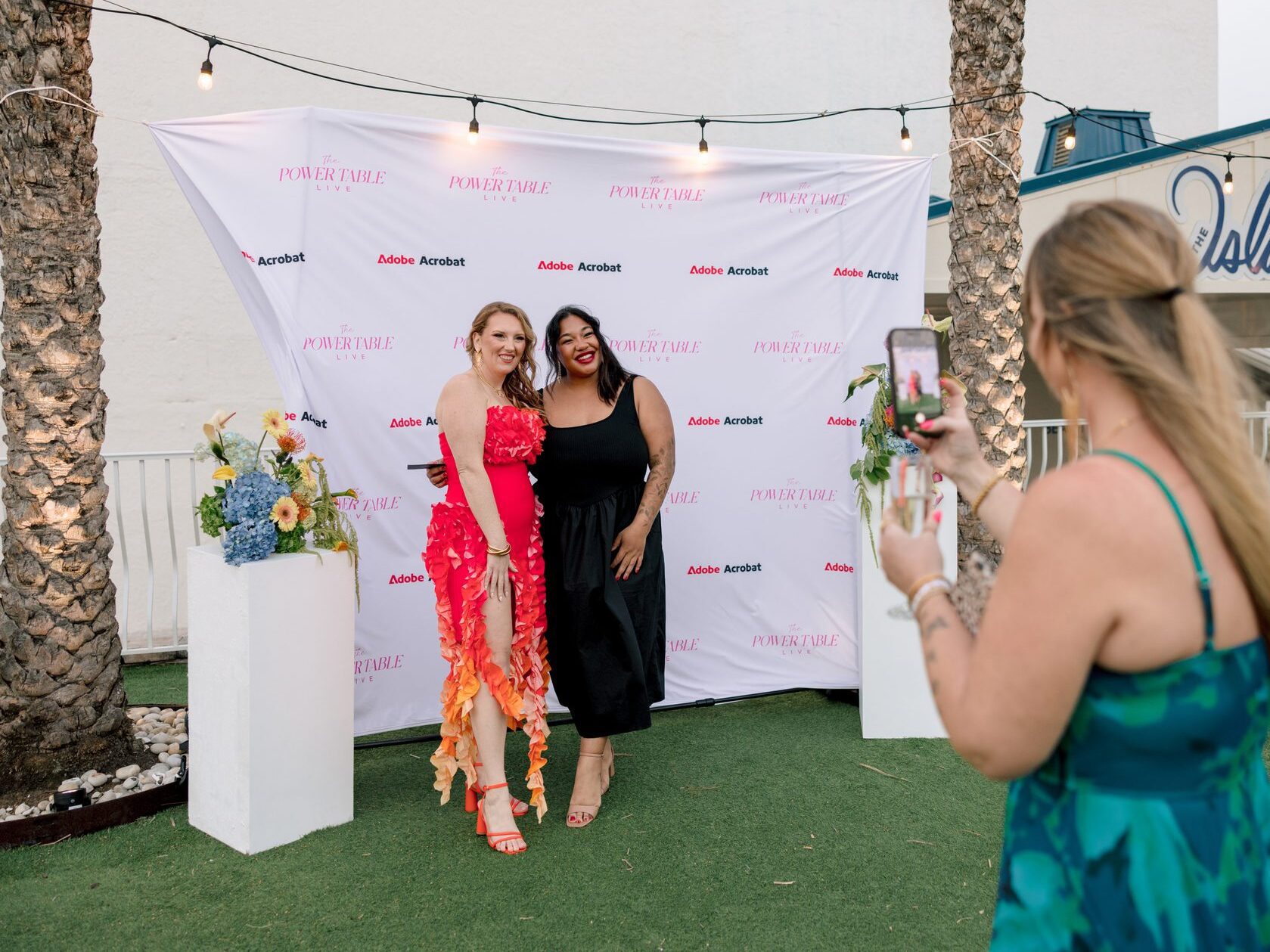
The biggest story at Cannes this year was the creator economy. The creators. Brands built massive activations to chase the people with the largest followings, and nearly every headline out of the festival said some version of the same thing. Attention is the whole game now.
I think that story misses the more interesting one. For the last five years, the advice to mid-career women has been to become a Creator. Post more. Build an audience. Feed the algorithm. Millions of women did exactly that, and a lot of them are exhausted, underpaid, and lost in the same crowded feed.
It’s time we talk about the alternative.
This spring I hosted a private dinner in Destin, Florida. Twenty highly experienced women, experts in their field, invite only, all from my network, who flew in from across the US and Canada. I spent hours on the seating chart.
I seated them for referrals, for podcast and speaking swaps, and for experience, so that everyone was seated next to other entrepreneurs at a level that would meet or challenge them.
Before the dinner I asked each of them: who are you hoping to meet, and what introduction are you looking for? Then I built the night around their answers. My job was not to give a speech. It was to make sure every woman left with a connection she did not walk in with, not just conversations with people she already knew.
That single dinner produced paid speaking engagements, client referrals, and even a new joint venture between two women now going after a large corporate contract together. I didn’t create a single piece of content that night. I curated who sat next to whom, and the returns are still compounding.
And I’m not the only one doing this.
Let’s call her the Curator.
A curator is someone who creates a highly valuable, in-depth conversation and experience that delivers on three things. Innovation, trust, and access.
She is not chasing attention. She is deciding where it goes. She’s influencing who needs to meet whom, and facilitates ideas, collaborations, and client acquisition.
This is not a new role. In the 1700s and 1800s, the woman who ran the room held the power. She decided who was invited and introduced, and whose ideas got heard. History named her the salonnière. The host, not the performer, moved the culture and business forward.
Vogue Business called Community Leaders the ‘IRL Influencers’ last year. It’s a shift that the media and global brands are starting to take notice of and the timing is not coincidental.
AI has made content infinite. Anyone can produce a post, a podcast, or a course in minutes, so the bottleneck is no longer making things. It is knowing who to trust.
A curated room answers that.
After a private yacht day I hosted earlier this year, a woman in the group chat asked for a service provider recommendation, and a name came up. Another woman and I quietly said we would not work with that company based on past experience, and the hire did not happen. That is curation too. It is not only who I invite in. It is who I steer my inner circle away from. No amount of content can create that kind of protection.
Here is my prediction, and it is not the hot take you might expect.
The Creator Economy is not going anywhere. The people who master it will be the tiny fraction who make millions, and good for them. But for the mid-career female founder, the far better opportunity is curation. Curating conversation, opportunity, and community instead of only producing content. That is the lane with less competition and more compounding results, and almost no one is telling women to take it.
So if you are a founder, stop trying only to create. Start curating. Host the dinner. Open a virtual room of coffee chats. Own the table. Become the person who makes the introductions. 83% of women professionals want more networking opportunities specifically designed for women. Curation has brought me international keynotes, brand partners, a magazine cover, client introductions, and brand growth. None of it came from chasing a follower count. It came from being the woman who holds the room.
And if you are a brand or a media outlet, understand who actually moves a market. It is not always the woman with the biggest following. It is the woman who is building private tables of influence. Her audience acts on her word.
The Creator makes the content. The Curator decides which conversations matter. One of those is a job. The other is power.
Sources: Forbes, “Cannes Lions 2026: It Was Hot. The Creator Economy Was Hotter”; Vogue Business, “Are community event leaders the new influencers?”; DemandSage, Creator Economy Statistics 2026
This is Article 6 in the Female Founder Economy series.
I write this series from what I see firsthand: the rooms, the private conversations, and the businesses women are actually building. The entire article series can be found on my website, www.taylorsmithonline.com
For media inquiries, interview requests, or speaking opportunities, use the contact form on my website or reach me directly at taylor@taylorsmithonline.com.
I’m Taylor Smith
Welcome to a space where personal branding meets personal development. Here, you’ll find insights, strategies, and a dose of inspiration to help you stand out, own the stage, and lead with confidence.


Read the Article
5 Ways to Land Your First Speaking or Podcast Opportunity
read the article

Join My Mastermind
Ready to Stand Out Online?
Let’s work together to build your business's visibility & scale inside The Power Table Mastermind.


