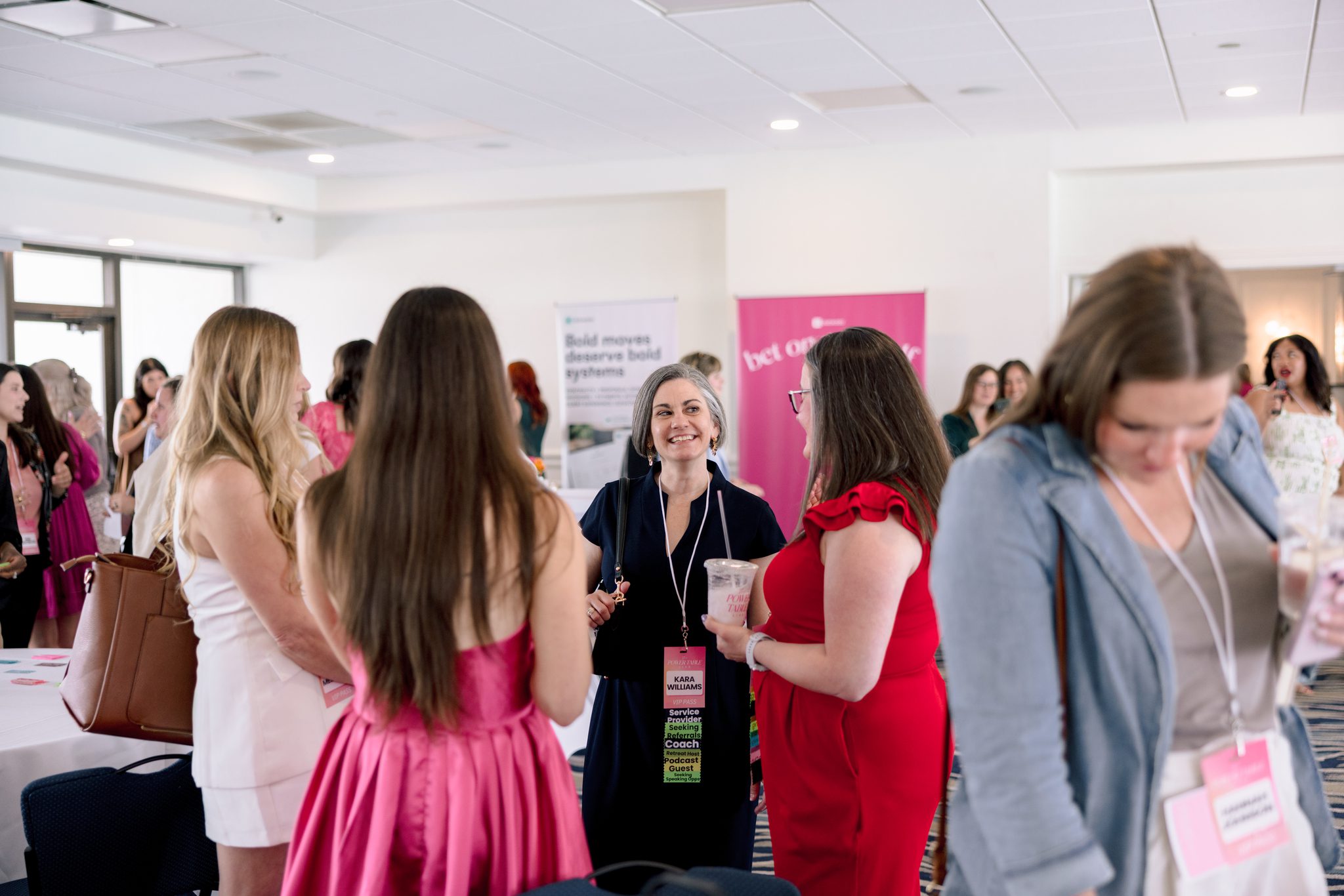


This is Article 12 of the Female Founder Economy series.
In this series, I define and document the Female Founder Economy: the goals, priorities, revenue models, and growth patterns of entrepreneurial women who are building their companies primarily online. Topics explored across the series include, but are not limited to, visibility, leadership, team and scale, revenue and economic impact, emotional and mental well-being, relationship capital, and AI.
What Corporate Brands Still Don’t Understand About Female Founders
Every group chat, thread, and mastermind I’m in with other female founders is passing around one tool right now. They won’t stop talking about this brand.
It is called Wispr Flow. It lets you voice your work instead of typing it. Women in my community are adopting it fast, because they can draft an email while washing dishes or get past writer’s block in the car on the way to hockey practice.
I have watched it come up at private dinners, in masterminds, and in my Threads feed for weeks. As of May, Bloomberg reported the company was in talks to raise at a $2 billion valuation. Its rapid rise among female agency owners, coaches, and service providers is probably flying completely under the brand’s radar.
And that is the thing many corporate brands still miss about female founders. They think they are buying an audience. They are actually buying a distribution channel, where brands and products are endorsed privately more than publicly. Who is using it matters more than the features, price, or marketing.
When a woman in my community wants to know what to use for her business, she does not open an ad for a product she saved. She asks her trusted Inner Circle. And she does not act on the answer because the product is clever or well built. She acts because someone she trusts, someone who actually uses it, tells her it will solve her specific problem. Trust transfer drives the majority of her buying decisions. The product is essentially secondary to the person vouching for it.
“I want to use whatever you’re using.”
“I want someone I trust to walk me through it.”
“I want to give the company feedback and talk to a real person.”
This is the kind of thing I hear female founders express frequently when they’re considering brand or product adoption.
The numbers say brands should have learned this by now. Women control $31.8 trillion in spending and drive 70 to 80 percent of consumer purchases, according to NielsenIQ. And still, 91 percent of women say brands do not understand them. Edelman’s 2025 trust report shows why the usual playbook fails here. People trust friends, family, and customers like themselves far more than they trust influencers or CEOs. The recommendation that closes the sale is not the one on the billboard. It is the one in the group chat.
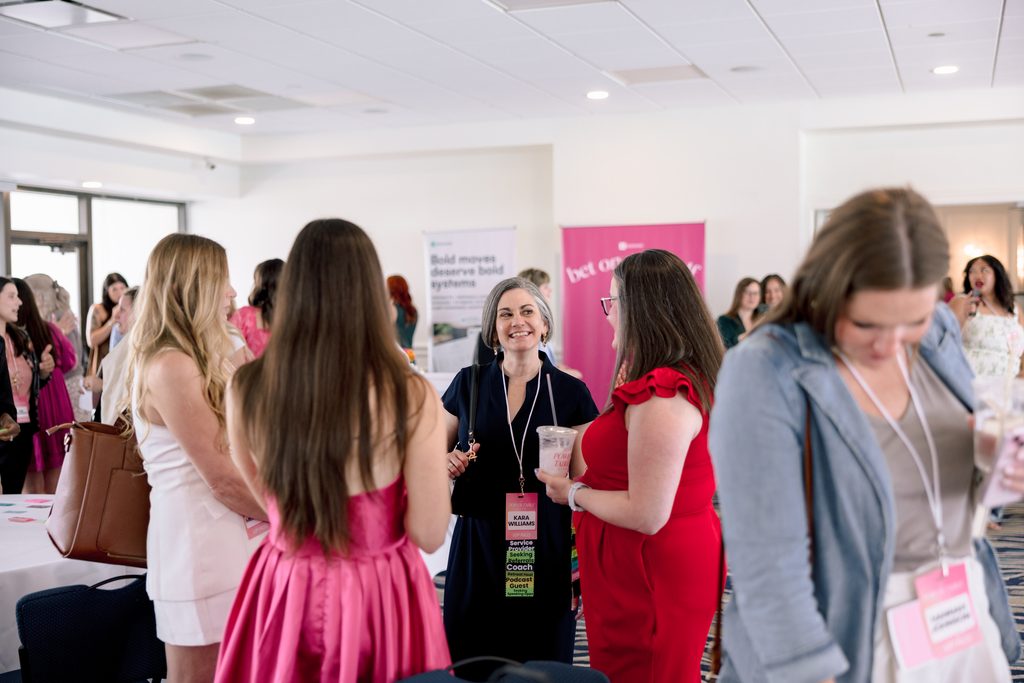
And that group chat is the part brands cannot see. The recommendation moves through private rooms. A dinner. A community thread.
By the time a founder buys, she has double and triple checked the decision with her trusted network.
The brand’s dashboard shows a conversion. It does not show the six other women who vouched for the product first over coffee and a mastermind call.
I can tell within one conversation whether a brand understands this. The partners who get it ask to talk to my community. They ask what type of brand partnership or experience has worked with my community before. They want lifetime customers, and they show up like it, with a presence at live events, sponsored episodes, real workshops, and access that lasts.
The corporate brands who do not get it lead with a one-time discount and a list of features. They tell me what converts for them and how little they plan to spend per event or per head. They are trying to win on price and speed with an audience that only moves on trust and time.
Right now, corporate brands have a massive opportunity to access the female founder community and secure lifetime customers. Women now launch 49% of all new businesses in the U.S. — up 69% over five years. Women-owned businesses also grew 17% between 2019 and 2024 — while men-owned businesses grew just 12%. Women aren’t a niche audience anymore. They’re the fastest-growing segment of the economy, and the brands that build trust with them early will own that loyalty for decades.
The smartest brands will stop buying reach and start investing in relationships now. They will partner with trusted female leaders, community builders, and event hosts. They will back the niche experts publishing real long-form content and podcasts, the women whose word actually moves a room. And they will do it early, because this kind of affinity takes years to build and pays for years after.
So I’d like to offer one sentence to every brand weighing a female-founder partnership.
Your ad might reach your potential customer in her feed, but her network is what closes the sale. Consider this your invitation to take a seat at our table.
Sources: NielsenIQ, “Women’s Impact on the CPG Landscape” (April 2024); Edelman, “Brand Trust: From We to Me” (June 2025); Bloomberg, “AI Dictation Startup Wispr in Funding Talks at $2 Billion Value” (May 2026). Synovus – Women Entrepreneurs in the U.S.: 2025 Growth Trends, MBE Magazine – Women-Owned Businesses Are Growing Fast.
This is Article 12 in the Female Founder Economy series.
I write this series from what I see firsthand: the rooms, the private conversations, and the businesses women are actually building. The entire article series can be found on my website, www.taylorsmithonline.com
For media inquiries, interview requests, or speaking opportunities, use the contact form on my website or reach me directly at taylor@taylorsmithonline.com.
I’m Taylor Smith
Welcome to a space where personal branding meets personal development. Here, you’ll find insights, strategies, and a dose of inspiration to help you stand out, own the stage, and lead with confidence.


Read the Article
5 Ways to Land Your First Speaking or Podcast Opportunity
read the article

Join My Mastermind
Ready to Stand Out Online?
Let’s work together to build your business's visibility & scale inside The Power Table Mastermind.


